On this page
- What are NMN and NAD+, and why are they linked to energy?
- Does NAD+ really decline with age?
- Do NMN or NR supplements actually raise NAD+ in the body?
- Does raising NAD+ actually boost energy, muscle or slow ageing in humans?
- Is NMN safe, and who should be careful?
- Why has NMN's legal status been a moving target, and what should a Malaysian buyer check?
- What actually supports NAD+ and cellular energy day to day?
NMN and NR are supplements the body converts into NAD+, a molecule every cell needs to turn food into energy. NAD+ does fall with age, and these supplements reliably raise NAD+ in the blood. Whether that higher blood level actually gives you more everyday energy, or slows ageing, in humans still has no clear answer. Most of the boldest claims rest on animal studies, not people.
This page is a spoke in our cluster on cellular energy and healthy ageing, which itself sits under the pillar guide, why am I always tired? It sits next to the explainers on CoQ10 and creatine, two other molecules sold for energy and ageing. NMN (nicotinamide mononucleotide) and NAD+ (nicotinamide adenine dinucleotide) are the ones generating the loudest headlines right now, so this page grades them plainly: the biology that is genuinely solid, the human evidence that is thinner than the marketing suggests, and the practical checks worth doing before you buy anything in Malaysia.
- NAD+ is real and central to energy. Every cell uses NAD+ to convert food into ATP, the fuel it spends, and the body's NAD+ levels do decline with age.
- The supplements do raise blood NAD+. Human trials show NMN and NR reliably lift NAD+ in the blood, one nicotinamide riboside trial by about 60%.
- Blood is not the same as benefit. Many trials have not shown the extra NAD+ reaching tissues, and a 2025 pooled analysis of 10 trials found no gain in muscle strength or physical function in older adults.
- The safety record so far is reassuring but short. Reported side effects in trials are mild; long-term safety in healthy people is not established.
- Even the rules keep changing. The US FDA removed NMN from its supplement definition in 2022, then reversed that position in 2025, a sign of how unsettled the category still is.
What are NMN and NAD+, and why are they linked to energy?
NAD+ is a coenzyme found in every living cell, and it is essential to how cells turn food into energy. NMN and NR are smaller molecules the body uses as raw material to make NAD+, which is why supplement makers sell them as a way to top NAD+ up. Without enough NAD+, the chemical reactions that produce ATP simply cannot run.
Think of NAD+ as a shuttle that carries electrons through the energy-making steps inside your mitochondria. The same molecule is also used by a family of repair-and-maintenance proteins called sirtuins, which is where the ageing story comes from: because NAD+ sits at the crossroads of energy production and cellular housekeeping, the theory goes that raising it could help cells behave younger. That is a reasonable hypothesis about biology, not a proven outcome in people, and the gap between the two is the whole point of this page. NMN and NR are both precursors, so they are two routes to the same destination rather than rival products.
Does NAD+ really decline with age?
Yes, this part is well established. NAD+ levels fall as people get older, though exactly how much depends on the tissue measured and the method used. A 2023 review in The Journals of Gerontology summarised the human data as NAD+ being anywhere from roughly 10% to 80% lower with advancing age, a wide range that honestly reflects how varied the measurements are.
The important nuance is that a lower level is not automatically a deficiency you must correct. NAD+ declining with age is a real, measurable trend, but no one has established a threshold below which health suffers or a target you should supplement back up to. As the same Gerontology review notes, the science is still working out whether restoring NAD+ changes anything you would actually feel. If your tiredness is recent or heavy, the far more common and fixable causes, covered in iron, B12 or vitamin D deficiency, deserve checking first.
Do NMN or NR supplements actually raise NAD+ in the body?
In the blood, yes. This is the strongest human finding in the whole field: oral NMN and NR both raise NAD+ measured in blood cells. A well-known 2018 trial of nicotinamide riboside in healthy middle-aged and older adults found blood-cell NAD+ rose by about 60% versus placebo, and a 2022 trial of NMN in older men found it raised blood NAD+ too.
The catch is what that blood number does and does not prove. Raising NAD+ in a blood sample confirms the supplement is absorbed and reaches the bloodstream, but it does not confirm the extra NAD+ reaches the muscle, brain or other tissues where it would need to act. The 2023 Gerontology review is blunt on this point: many trials that measured a blood-NAD+ rise did not show that oral precursors raised NAD+ in tissues. So the honest position is that these supplements clear the first hurdle, absorption, while the second and more important hurdle, doing something useful in the tissues that matter, is far less settled.
Does raising NAD+ actually boost energy, muscle or slow ageing in humans?
This is where the marketing runs ahead of the evidence. In humans, raising NAD+ has not been shown to reliably improve everyday energy, muscle or ageing. Individual small trials report scattered, inconsistent signals, but when researchers pool the trials together, those signals largely wash out. Animal results are far stronger than human ones, and that gap matters.
Take muscle, the most-studied endpoint. A single 2022 NMN trial in older men reported a faster walking speed and one improved grip measure, which sounds promising in isolation. But a 2025 systematic review that pooled 10 randomised trials of NMN and NR reached the opposite conclusion once the noise of individual studies was averaged out.
Current evidence does not support NMN and NR supplementation for preserving muscle mass and function in adults with mean age of over 60 years. Prokopidis et al., Journal of Cachexia, Sarcopenia and Muscle, 2025
There is one genuine human positive to be fair about: a 2021 trial in 48 amateur runners found that NMN at 600 to 1,200 mg per day improved aerobic capacity over six weeks, alongside structured training. That is a real result, but read it carefully. It measured athletic performance in people already training hard, not everyday tiredness in an average adult, and the benefit came bundled with the exercise. The table below lines up the common claims against what the human trials actually found.
| What the marketing says | What human trials actually show |
|---|---|
| Restores youthful NAD+ and reverses ageing | NAD+ in the blood does rise; no human trial has shown ageing reversed |
| More energy, less fatigue | One 12-week trial saw faster walking and one grip measure improve; pooled trials found no consistent gain |
| Builds and protects muscle | A 2025 analysis of 10 trials found no significant effect on muscle mass or strength in the over-60s |
| Boosts athletic performance | A trial in trained runners improved aerobic capacity at 600-1,200 mg/day, alongside hard training |
| Clinically proven anti-ageing | No regulator has approved such a claim; even NMN's status as a supplement has been disputed |
The fair summary: NMN and NR reliably move a NAD+ blood test, sometimes nudge a single performance measure in one trial, and have not been shown to deliver the broad energy or anti-ageing benefits the labels imply.
Is NMN safe, and who should be careful?
For healthy adults over the short term, the supplements have looked well tolerated in trials, with mild side effects. Cleveland Clinic lists possible effects such as nausea, headaches, lightheadedness, diarrhoea and flushing, and notes that the long-term risks are simply not yet known because the studies have not run long enough.
Reassuring short-term data is not the same as a clean long-term bill of health, and that distinction matters most for the people the trials did not study. Cleveland Clinic advises extra caution for anyone who is pregnant or breastfeeding, being treated for a serious illness, or already taking regular medication, and recommends speaking to a healthcare professional before starting. Because a supplement is not pre-approved by a regulator for effectiveness, the label's promise is not a guarantee, and quality between products can vary widely.
Why has NMN's legal status been a moving target, and what should a Malaysian buyer check?
NMN's regulatory status has genuinely swung back and forth, which is unusual for a supplement and worth knowing. In 2022 the US FDA took the position that NMN could not be sold as a dietary supplement, because it had first been authorised for study as a drug; on 29 September 2025 the agency reversed that position and confirmed NMN could be sold as a supplement after all. Few nutrients have had their basic legal category flip twice in three years.
In Malaysia, NMN is sold widely as a health supplement, on pharmacy shelves and general marketplaces, often under bold anti-ageing marketing. The practical safeguard is the same one that applies to any supplement here: Malaysia's National Pharmaceutical Regulatory Agency (NPRA) requires registered products to carry a MAL registration number on the label, and states that products without proper security labelling are treated as unregistered. Registration checks manufacturing and labelling standards, not whether the product slows ageing, so a MAL number tells you the product is properly on the market, not that the headline claim is true. For a loose, no-brand NMN powder or capsule with neither a MAL number nor a security hologram, that missing marker is a real reason to pause.
What actually supports NAD+ and cellular energy day to day?
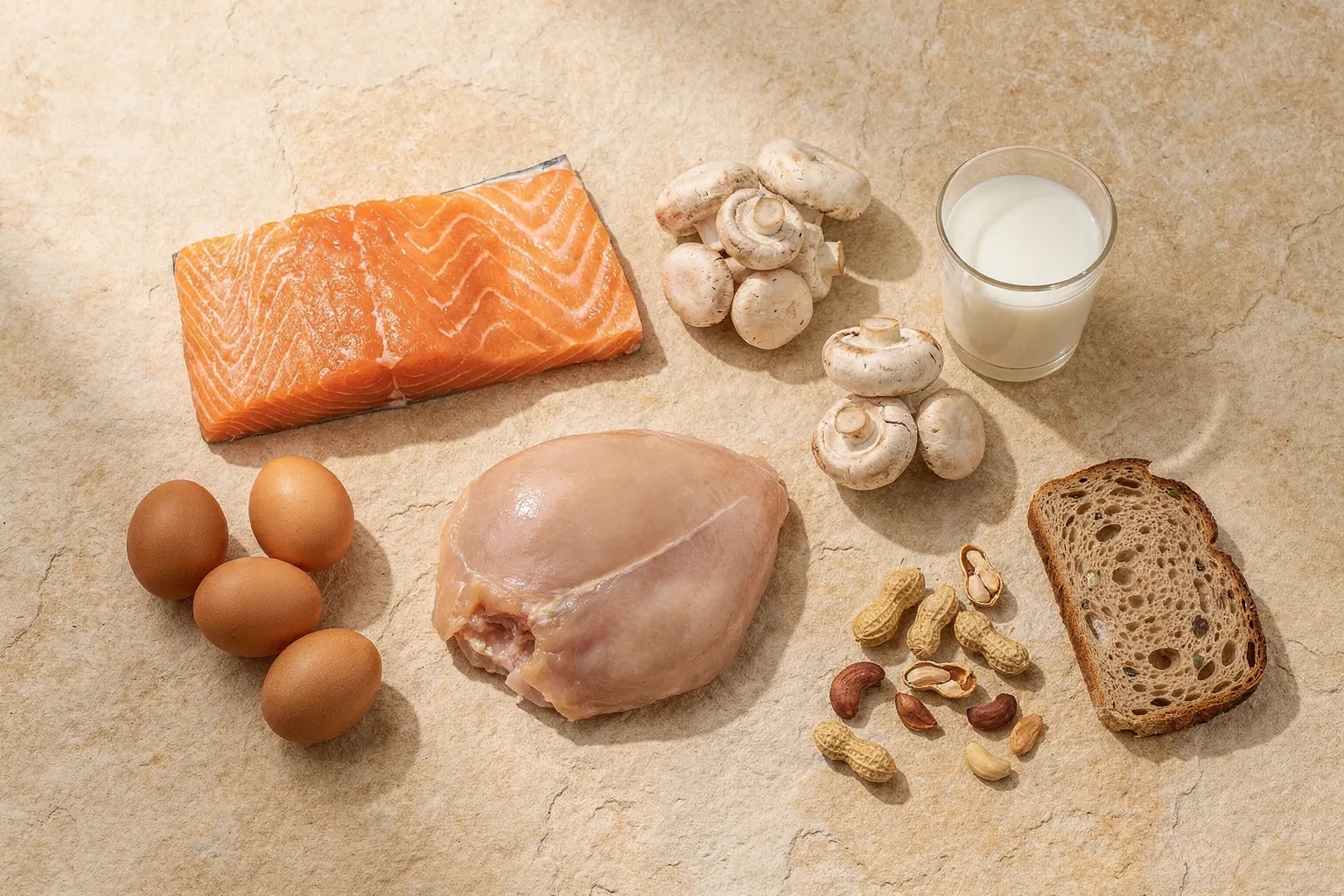
The least glamorous levers are the best supported. Your body already makes NAD+ from vitamin-B3 building blocks in everyday foods, and the single most reliable way to build healthier, more efficient mitochondria is exercise, not a capsule. Cleveland Clinic points to NAD-precursor-rich foods such as poultry, fish, eggs, dairy, wholegrains and nuts, plus regular physical activity, as the sensible foundation.
This is the same conclusion the rest of this cluster reaches about every trendy energy molecule. As with CoQ10 and creatine, a genuine nutrient shortfall is worth correcting, but no pill reliably out-performs movement, sleep and a varied diet for cellular energy, and the science on NAD+ boosters in healthy people remains, in Cleveland Clinic's own words, limited or inconclusive. If your energy has dropped noticeably, that is a reason to look at the common, checkable causes in why am I always tired? and is it normal to feel more tired with age?, rather than to reach first for the most-marketed molecule. Whether an NMN supplement is worth your money is genuinely individual, and a short, no-pressure conversation with someone who reads the studies can save you both money and disappointment.
Frequently asked questions
Does NAD+ really drop as you get older?
Yes, this is well established. Human studies report NAD+ being roughly 10% to 80% lower with age, a wide range that reflects different tissues and measurement methods. But a lower level is not automatically a deficiency you must correct: no one has set a threshold below which health suffers, or a target you should supplement back up to. NAD+ declining is a real trend, not proof that topping it up with a pill will change how you feel.
Do NMN or NR supplements actually raise NAD+?
In the blood, yes. A 2018 trial of nicotinamide riboside raised blood-cell NAD+ by about 60% versus placebo, and a 2022 NMN trial raised blood NAD+ in older men. The unresolved part is whether that reaches the tissues where it would need to act: a 2023 review noted many trials showed a blood-NAD+ rise without evidence that NAD+ actually increased in tissues. Absorption is proven; a tissue-level effect is far less certain.
Will NMN give me more energy or slow ageing?
There is no clear human proof of either yet. Single small trials show scattered signals, one 2022 study found a faster walking speed and one improved grip measure, and a 2021 study in trained runners improved aerobic capacity, but a 2025 analysis pooling 10 trials found no significant benefit for muscle mass or physical function in older adults. Animal results are much stronger than human ones, and no human trial has shown ageing reversed.
Is NMN safe to take?
Over the short term, trials report it as well tolerated with mild side effects. Cleveland Clinic lists possible effects such as nausea, headaches, lightheadedness, diarrhoea and flushing, and notes that long-term safety is not yet known. Extra caution is advised for anyone pregnant or breastfeeding, being treated for a serious illness, or taking regular medication. Speak to a healthcare professional before starting, and remember a supplement's effectiveness is not pre-approved by a regulator.
Is NMN legal to buy in Malaysia?
NMN is sold widely in Malaysia as a health supplement. The practical check is the same as for any supplement: Malaysia's NPRA requires registered products to carry a MAL registration number on the label, and treats products without proper security labelling as unregistered. A MAL number means the product is properly on the market, not that the anti-ageing claim is true. It is worth knowing that even the US FDA changed its position on NMN twice between 2022 and 2025, a sign of how unsettled the category is.
What is the cheapest way to support NAD+ without a supplement?
Food and movement. Your body makes NAD+ from vitamin-B3 building blocks in everyday foods, and Cleveland Clinic points to poultry, fish, eggs, dairy, wholegrains and nuts, plus regular exercise, as the sensible foundation. Exercise is the single most reliable way to build healthier mitochondria, and no NAD+ pill has been shown to out-perform it in healthy people. Correcting a genuine nutrient gap is worthwhile; buying the most-marketed molecule for general energy is not clearly so.
References
- Dietary Supplementation With NAD+-Boosting Compounds in Humans: Current Knowledge and Future Directions (Freeberg et al., The Journals of Gerontology: Series A, 2023) — NAD+ ~10-80% lower with age; blood NAD+ rises with NR/NMN but many trials show no tissue-NAD+ rise; clinical benefits limited.
- Chronic nicotinamide riboside supplementation is well-tolerated and elevates NAD+ in healthy middle-aged and older adults (Martens et al., Nature Communications, 2018) — NR 1,000 mg/day for 6 weeks raised blood-cell NAD+ ~60% vs placebo; well tolerated; blood pressure lower in an elevated-BP subgroup.
- Chronic nicotinamide mononucleotide supplementation elevates blood NAD levels and alters muscle function in healthy older men (Igarashi et al., NPJ Aging, 2022) — NMN 250 mg/day for 12 weeks raised blood NAD+; gait speed and left grip improved, muscle mass unchanged.
- The Effect of Nicotinamide Mononucleotide and Riboside on Skeletal Muscle Mass and Function: A Systematic Review and Meta-Analysis (Prokopidis et al., Journal of Cachexia, Sarcopenia and Muscle, 2025) — 10 RCTs; no significant effect on muscle mass, grip strength, gait speed or chair-stand in over-60s.
- Nicotinamide mononucleotide supplementation enhances aerobic capacity in amateur runners: a randomized, double-blind study (Liao et al., Journal of the International Society of Sports Nutrition, 2021) — 48 trained runners; NMN 600-1,200 mg/day for 6 weeks improved aerobic capacity alongside training.
- Do NAD+ Supplements Work? (Cleveland Clinic, 2026) — evidence limited or inconclusive; possible mild side effects; food (poultry, fish, eggs, dairy, wholegrains, nuts) and exercise recommended; speak to a healthcare provider first.
- FDA Declares Nicotinamide Mononucleotide Is a Dietary Supplement (Venable LLP, 2025) — the FDA excluded NMN from the supplement definition (2022) then reversed that position on 29 September 2025.
- Product Registration FAQ (National Pharmaceutical Regulatory Agency, Malaysia) — registered products must display a MAL registration number; products without security labelling are treated as unregistered.